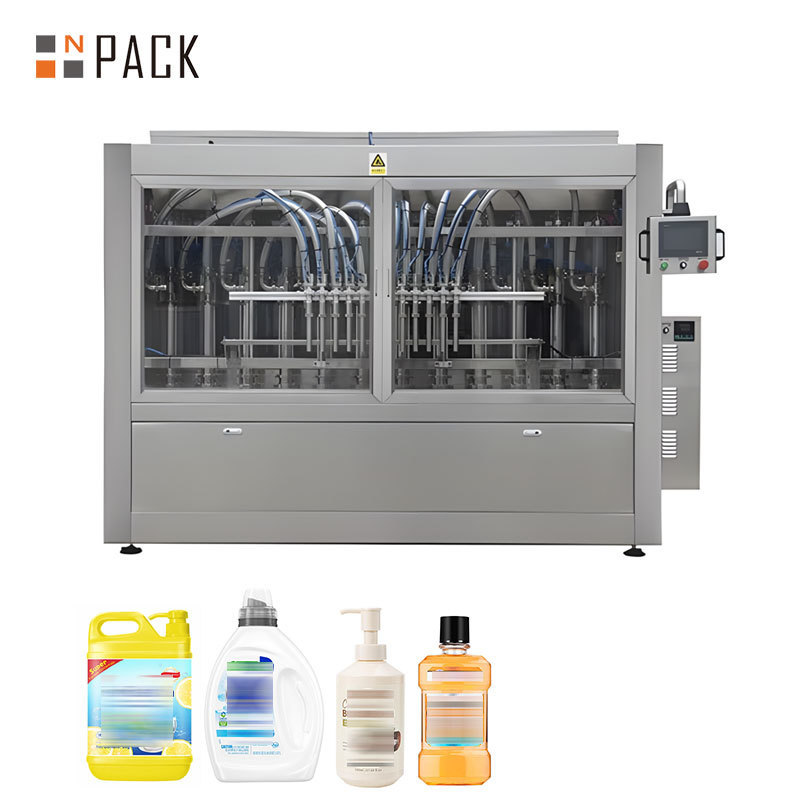
Máy điền chai quy mô nhỏ tự động
Máy điền chai quy mô nhỏ tự động là lý tưởng cho các doanh nghiệp cần điền chính xác và hiệu quả mà không cần sản xuất quy mô lớn.giảm thiểu chất thải sản phẩm, và đảm bảo độ chính xác lấp đầy nhất quán.
Loại máy đổ chai quy mô nhỏ này được sử dụng rộng rãi để sản xuất hàng nhỏ chất lỏng như kem dưỡng da, dầu gội và tinh dầu.Nó cung cấp một giải pháp giá cả phải chăng và thực tế cho các doanh nghiệp khởi nghiệp và phát triển muốn cải thiện hiệu quả trong khi kiểm soát chi phí.
Đặc điểm chính
1Hệ thống điều khiển servo
Đảm bảo hiệu suất lấp lỏng, ổn định và chính xác.
2Tốc độ lấp đầy điều chỉnh
Cài đặt tốc độ linh hoạt để phù hợp với các yêu cầu sản xuất khác nhau.
3Thiết kế bể bể trên vệ sinh
Không có góc chết để dễ dàng làm sạch, lý tưởng cho vật liệu nhớt và chất lượng thực phẩm.
4- Ứng dụng sưởi ấm và trộn tùy chọn
Duy trì kết cấu và chất lượng sản phẩm nhất quán trong khi điền.
5. Độ chính xác lấp đầy cao
Độ chính xác lên đến ± 0,5%, giảm chất thải và đảm bảo kết quả đồng nhất.
6Tiêu chuẩn chất lượng và vật liệu
Phù hợp với ISO-9001 và được xây dựng bằng thép không gỉ cấp GMP để bền và vệ sinh.
7Tùy chọn lấp đầy từ dưới lên
Thích hợp cho chất lỏng bọt hoặc dày, giảm thiểu bong bóng và tràn.
8. Hệ thống định vị chính xác
Đảm bảo sự sắp xếp chính xác chai và làm sạch việc đổ đầy.
9Không chai, không đổ.
Ngăn chặn việc điền không có chai, cải thiện hiệu quả và giảm mất mát.
10.Cấu trúc thép không gỉ đóng
Tăng cường an toàn, sạch sẽ và bảo vệ thiết bị.
11.Easy điều chỉnh âm lượng
Thay đổi khối lượng lấp đầy nhanh chóng và thuận tiện thông qua màn hình cảm ứng.
12.Điều khiển Piston độc lập
Cho phép điều chỉnh chính xác của mỗi piston cho hiệu suất lấp đầy tối ưu.
Parameter
|
|
|
|
|
|
|
|
NP-VF-16
|
|
|
|
4
|
|
|
|
|
16
|
|
|
100-500ml, 100-1000ml, 1000-5000ml
|
Công suất
cơ sở trên 500ml
|
12-14 bpm
|
24-28 bpm
|
36-42bpm
|
48-56 nhịp / phút
|
60-70bpm
|
70-80 bpm
|
80-100 bpm
|
|
|
|
|
|
|
|
|
|
220VAC PHÁI Đơn 3000W
|
Chi tiết sản phẩm
| - Nạp vòi. |
- Thép không gỉ hình U-Top Hopper |
 |
|
| -Động cơ phục vụ |
-Piston thép không gỉ |
|
|
Làm thế nào để tôi cài đặt và thiết lập Máy điền quy mô nhỏ?
Các bước cơ bản bao gồm:
- Sau khi giải nén, đặt thiết bị trên một bề mặt làm việc ổn định, bình đẳng;
- Kết nối nguồn cung cấp điện và nguồn không khí (đối với các mẫu khí);
- Đảm bảo rằng bộ lọc trên đường dẫn nước được lắp đặt đúng cách;
- Thiết lập thời gian lấp đầy hoặc tham số khối lượng lấp đầy;
- Thực hiện thử nghiệm và hiệu chuẩn thiết bị.
Phải làm gì nếu nồng độ chất lỏng trong chai không phù hợp sau khi đổ đầy?
Đầu tiên, kiểm tra xem vòi phun có bị tắc nghẽn hoặc bị hư hỏng hay không, và loại bỏ bất kỳ trở ngại nào.Kiểm tra các niêm phong của hệ thống, các đầu nối và van cho bất kỳ dấu hiệu mòn hoặc rò rỉ.


 english
 français
 Deutsch
 Italiano
 Русский
 Español
 português
 Nederlandse
 ελληνικά
 日本語
日本語
 한국
한국
 العربية
 हिन्दी
 Türkçe
 indonesia
 tiếng Việt
 ไทย
ไทย
 বাংলা
বাংলা
 فارسی
فارسی
 polski